
Do Iron Doors Get Hot in the Texas Sun?
Yes, iron doors can get hot when exposed to direct Texas sunlight because metal conducts and absorbs heat. However, a hot exterior surface does not automatically mean excessive heat will enter your home. Door construction, glass type, insulation, thermal breaks, weather sealing, color, sun exposure, and installation all influence how much outdoor heat reaches the interior.
At Iron Doors Plus, Inc., we understand that Texas homeowners need an entry door to do more than make a beautiful first impression. It also needs to perform in a climate known for intense sunshine and long, hot summers. Our team combines craftsmanship, durable materials, carefully selected glass options, and energy-conscious design to help homeowners choose doors that balance beauty, security, and comfort. Whether your entrance receives direct afternoon sun or sits beneath a covered porch, choosing the right configuration matters. Understanding how iron doors respond to heat can help you make a more informed investment and enjoy the dramatic appearance of iron without overlooking practical considerations.
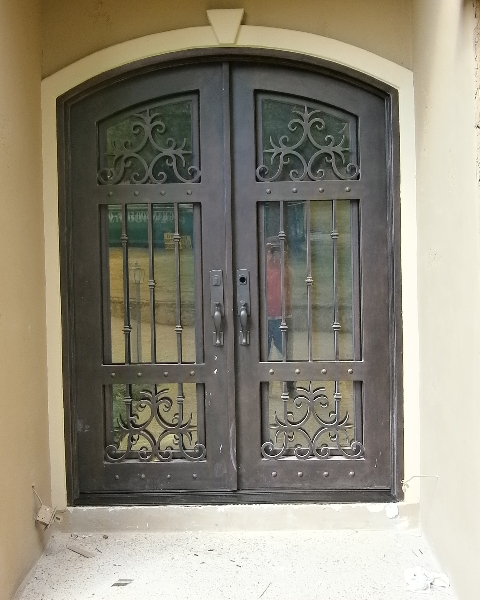
How Do Iron Entry Doors Perform in Hot Weather?
A well-designed iron entry door can perform effectively in hot weather, but the door should be evaluated as an entire system rather than by the temperature of its exterior metal surface alone.
Metal conducts heat more readily than many traditional building materials. That means an iron or steel surface exposed to direct sunlight can become noticeably warm or hot. What matters for indoor comfort is how effectively the complete door assembly limits that heat transfer.
Why Do Iron Doors Get Hot in Direct Sunlight?
Iron doors heat up because their exterior surfaces absorb solar energy, especially when exposed to direct sunlight for several hours. The amount of heat absorbed varies according to the door’s finish, orientation, surrounding shade, glass, construction, and local weather conditions.
A west-facing front door, for example, can experience strong afternoon sun during the hottest portion of a Texas summer day. An entry beneath a deep porch or overhang may receive substantially less direct solar exposure.
Homeowners planning an iron entry door should therefore consider:
- Which direction the entrance faces
- How many hours of direct sunlight it receives
- Whether a porch, overhang, tree, or architectural feature provides shade
- The amount and type of glass in the door
- The door’s construction and insulating features
- Weather stripping and the quality of installation
The goal is not necessarily to keep the outside of a metal door cool. Instead, the goal is to reduce unwanted heat transfer into the home.
Does a Hot Iron Door Make Your House Hotter?
Not necessarily. Exterior surface temperature and indoor heat gain are two different things. An iron door can feel hot outside while a properly designed door system helps limit how much of that heat reaches the conditioned interior.
Thermal performance is one reason homeowners should look beyond appearance when comparing entry doors. The National Fenestration Rating Council (NFRC), an independent organization that rates windows and doors, uses measurements such as U-factor and Solar Heat Gain Coefficient (SHGC) to evaluate energy performance. NFRC explains that a lower SHGC indicates that a product is better at resisting unwanted solar heat gain, an important consideration during hot summers.
Glass can play a particularly important role when an iron door includes large glass panels. Iron Doors Plus offers options such as double-pane insulated Low-E glass in its Metro Line. Low-E technology is designed to help manage solar energy while allowing homeowners to enjoy the natural light and visual appeal that make glass-and-steel entrances so popular.
How Can You Reduce Heat Transfer Through an Iron Door?
The best way to manage Texas heat is to select the door’s construction, glass, placement, and installation with thermal performance in mind. Several features can make a meaningful difference.
1. Consider thermal break technology
A thermal break uses an insulating separator between conductive metal sections to interrupt the path heat would otherwise follow through the frame.
Iron Doors Plus’s Metro Steel products incorporate thermal break design. The company also uses Dow Corning 795 Silicone Building Sealant between the glass and glass stops as an additional barrier intended to reduce thermal energy transfer.
It is important to ask about the construction of the specific door you are considering, since not every iron door or product line is thermally broken.
2. Choose glass carefully
Large expanses of glass create a beautiful, light-filled entrance, but glass selection matters in sunny climates. Low-E, insulated, reflective, and other performance-oriented glass options can help manage solar heat.
For example, Iron Doors Plus offers bronze reflective glass designed to reflect solar radiation while providing a contemporary appearance and increased daytime privacy.
3. Use architectural shade
A porch, covered entry, awning, or appropriately designed overhang can reduce direct solar exposure before sunlight ever reaches the door. This is particularly worth considering for entrances exposed to strong afternoon sun.
4. Pay attention to weather sealing
Gaps around an entry door can allow hot outdoor air into the home regardless of how well the door itself is constructed. Quality weather stripping and a proper fit help create a tighter building envelope.
5. Prioritize professional installation
Even a high-quality door cannot perform as intended if it is poorly fitted. Proper alignment, sealing, and installation help reduce air leakage and support the door’s overall thermal performance.
Are Iron Doors a Good Choice for Hot Climates?
Yes, iron doors can be a practical choice for hot climates when homeowners choose the right door for their exposure and performance needs. Texas heat should influence your buying decision, but it does not mean you have to rule out an iron entrance.
Modern door systems can combine iron or steel construction with insulated glass, Low-E coatings, thermal break technology in applicable product lines, weather sealing, and thoughtful installation.
Iron doors also offer benefits beyond thermal considerations. Homeowners choose them for their strength, distinctive architectural character, security, customization options, and ability to create an impressive focal point at the entrance.
Before ordering, ask your door specialist about the specific conditions at your home. A door receiving hours of direct western sunlight may call for different glass or performance features than one protected beneath a shaded entry.
Frequently Asked Questions About Iron Doors and Texas Heat
Do black iron doors get hotter in the sun?
Dark surfaces generally absorb more solar energy than lighter or more reflective surfaces, so a dark iron door exposed to direct sunlight can become hot. The effect on indoor comfort also depends on the door’s construction, glazing, insulation, shading, and sealing.
Can you touch an iron door after it has been in direct sunlight?
An exterior metal surface can become uncomfortable to touch after prolonged exposure to intense sunlight. Handles and other exposed metal components can also heat up, so use caution during extremely hot, sunny conditions.
Does Low-E glass help with Texas heat?
Yes. Low-E glass is designed to help manage radiant heat transfer. For doors with substantial glazing, choosing appropriate glass can help reduce unwanted solar heat gain while maintaining natural light.
What should I ask before buying an iron door for a hot climate?
Ask about the door’s insulation, thermal break construction, glass specifications, weather sealing, finish, installation requirements, and suitability for your entrance’s sun exposure. If energy performance is a priority, also ask whether specific performance ratings are available for the door configuration you are considering.
Choose an Iron Door Designed With Texas Living in Mind
A beautiful iron entrance should complement your home while accounting for the conditions it faces every day. Direct Texas sunlight can heat an iron door’s exterior, but thoughtful construction, appropriate glass, effective sealing, shade, and professional installation can help manage heat transfer and indoor comfort.
Ready to find an iron door that combines striking design, security, and smart performance? Contact Iron Doors Plus, Inc. to explore the right options for your home.