
Are Iron Doors Energy Efficient? What Homeowners Need to Know
Yes, iron doors can be energy efficient when they are properly designed, insulated, glazed, sealed, and installed. Because metal conducts heat readily, the door’s overall construction matters more than the iron itself. Features such as thermal breaks, insulated cores, energy-efficient glass, quality weatherstripping, and professional installation can significantly reduce unwanted heat transfer and air leakage.
At Iron Doors Plus, we understand that homeowners choose iron entry doors for more than their distinctive appearance. An exterior door also needs to contribute to a comfortable, secure, and efficient home. That is why it is important to consider the complete door system, including the frame, glass, insulation, seals, and installation, rather than focusing on the material alone. Whether you prefer an elaborate traditional design or a streamlined modern entrance, understanding energy-performance features can help you choose an iron door that delivers beauty without overlooking everyday comfort.
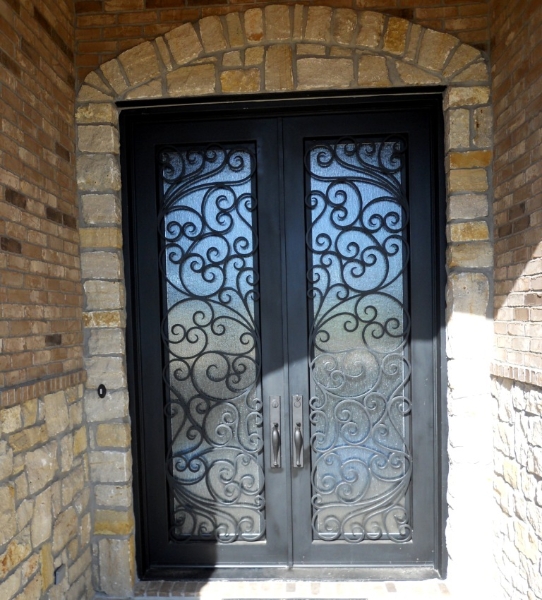
How Energy-Efficient Iron Entry Doors Reduce Heat Transfer
An energy-efficient iron entry door is designed to limit the movement of heat through the door assembly and reduce air leakage around its perimeter. For iron doors, thermal breaks, insulated construction, efficient glazing, and tight seals can all play important roles.
When comparing exterior doors, homeowners should look beyond appearance and consider how the entire system manages heat, sunlight, and airflow.
What Makes an Iron Door Energy Efficient?
The most important energy-efficiency features of an iron door are its thermal separation, insulation, glass package, weatherstripping, and installation quality. A beautiful door can still perform poorly if these components are overlooked.
Key features to consider include:
- Thermal breaks: A thermal break separates conductive metal components to help reduce heat transfer between the exterior and interior portions of the door.
- Insulated construction: Insulating materials within the door or frame can slow heat movement and improve indoor comfort.
- Energy-efficient glass: Insulated glass units and low-emissivity (Low-E) coatings can improve the performance of doors with substantial glass areas.
- Quality weatherstripping: Effective seals around the door help limit drafts and uncontrolled air infiltration.
- Proper thresholds and sweeps: Gaps beneath an exterior door can allow conditioned air to escape, making a well-fitted bottom seal important.
- Professional installation: Even a high-quality door may lose efficiency if the frame is improperly fitted, sealed, or aligned.
This is especially important with metal doors because metal is naturally conductive. The goal is not simply to choose iron, but to choose an iron door system engineered to control that conductivity.
What Are U-Factor and SHGC, and Why Do They Matter?
U-factor measures heat transfer through a door, while Solar Heat Gain Coefficient (SHGC) measures how much solar heat passes through the product. Lower numbers generally indicate less heat transfer or solar heat gain.
According to ENERGY STAR, U-factor tells consumers how well a window or door assembly insulates. ENERGY STAR notes that U-factor values for fenestration products generally range from about 0.25 to 1.25, with lower values representing better insulation.
SHGC is particularly relevant when a door contains glass. It is measured from 0 to 1, and a lower SHGC means less solar heat is transmitted through the product.
The National Fenestration Rating Council (NFRC) provides independent ratings that allow homeowners to compare the performance of doors, windows, and skylights. An NFRC label can include ratings for U-factor, SHGC, visible transmittance, air leakage, and condensation resistance.
Rather than relying on broad claims such as “energy efficient,” ask about the performance data available for the specific door configuration you are considering.
Does Glass Make an Iron Door Less Energy Efficient?
Glass can affect an iron door’s energy performance, but the amount and type of glass matter considerably. Insulated glazing and Low-E coatings can help control heat transfer and solar heat gain while still allowing homeowners to enjoy the natural light and visual impact of a glass-and-iron entrance.
ENERGY STAR’s current Version 7.0 criteria illustrate why glass configuration matters. Its requirements for certified exterior doors differ depending on whether the door is opaque, has glass covering half or less of the door, or has glass covering more than half.
When selecting a glass iron door, consider:
- How much of the door is glass
- Whether the glass is an insulated unit
- Whether Low-E coatings are available
- The door’s U-factor and SHGC, when rated
- The amount of direct sunlight the entrance receives
This allows you to balance natural light, curb appeal, privacy, and energy performance instead of assuming that all glass configurations perform the same way.
How Important Is a Thermal Break in an Iron Door?
A thermal break can be an important efficiency feature because it interrupts a direct path for heat to travel through conductive metal components. This can help reduce temperature transfer between exterior and interior surfaces.
The value of thermal separation can be seen in NFRC-rated metal door systems. For example, NFRC’s certified-product database includes aluminum doors specifically constructed with thermal breaks and insulated Low-E glazing, demonstrating how manufacturers combine metal construction with thermal-control technologies.
For homeowners comparing iron doors, useful questions to ask include:
- Does the door use thermally separated construction?
- What type of insulation is incorporated?
- What glazing package is included?
- Is performance data available for the complete door assembly?
Those details provide a much clearer picture than judging efficiency by door material alone.
Can an Energy-Efficient Exterior Door Lower Energy Costs?
A better-performing exterior door can help reduce unwanted heat transfer and air leakage, which can reduce the heating and cooling load associated with the home’s exterior envelope. Actual savings depend on the existing door, climate, home construction, installation, and other factors.
ENERGY STAR reports that installing ENERGY STAR certified windows, doors, and skylights can reduce heating and cooling energy bills by an average of up to 13 percent nationwide compared with non-certified products. That figure applies to qualifying window, door, and skylight upgrades as a category, so homeowners should not interpret it as a guaranteed savings percentage from replacing one iron door.
Installation also matters. Gaps around the frame, worn weatherstripping, or an improperly adjusted threshold can undermine the performance of an otherwise well-designed door.
FAQ: Energy Efficiency of Iron Doors
Are iron doors energy efficient in hot climates?
They can be. In hot climates, features that limit conductive heat transfer, solar heat gain, and air leakage are particularly valuable. Look for thermal separation, appropriate glazing, Low-E coatings, effective weatherstripping, and strong overall door performance.
What is a good U-factor for an exterior door?
Lower U-factors indicate better resistance to heat transfer. ENERGY STAR Version 7.0 currently sets different maximum U-factors depending on how much glass a door contains, including 0.17 for opaque doors, 0.23 for doors with half-lite or less, and 0.26 to 0.28 for doors with more than half glass, depending on climate zone requirements.
Is an iron door more energy efficient than a wood or fiberglass door?
Not automatically. Energy efficiency depends on the complete construction and performance of the door, not simply whether it is iron, wood, fiberglass, or another material. Compare insulation, glazing, thermal breaks, seals, installation, and verified performance ratings when available.
How can I tell if an iron door is energy efficient?
Ask about the door’s thermal-break construction, insulation, glass specifications, weatherstripping, and available NFRC performance ratings. ENERGY STAR-certified doors are independently tested, certified, and verified according to NFRC procedures.
Choose an Iron Door Designed for Beauty and Performance
An iron entry door can make a powerful first impression without forcing you to ignore energy efficiency. The key is choosing a well-designed door system with the right combination of thermal separation, insulation, glass, seals, and professional installation.
At Iron Doors Plus, we help homeowners explore iron door options that complement their home’s architecture while considering the practical features that matter every day.
Ready to find an iron door that combines lasting style, security, and thoughtful energy-performance features? Contact Iron Doors Plus to explore your options.